The details
About PRP Hair Restoration
in Hamilton.
Platelet-rich plasma, or PRP, uses a portion of your own blood prepared for injection into the scalp. It is one option considered for selected types of hair loss. PurBliss lists PRP hair restoration separately from FoLix laser treatment. The cause and pattern of thinning should guide the choice; a procedure name does not explain why hair is shedding.
Hair loss can have several contributors. A medical evaluation may be needed before a cosmetic treatment plan, particularly when the change is sudden, patchy or accompanied by scalp symptoms. Ask which findings make you a suitable candidate and how progress will be reviewed.
Make hair-loss history part of the appointment
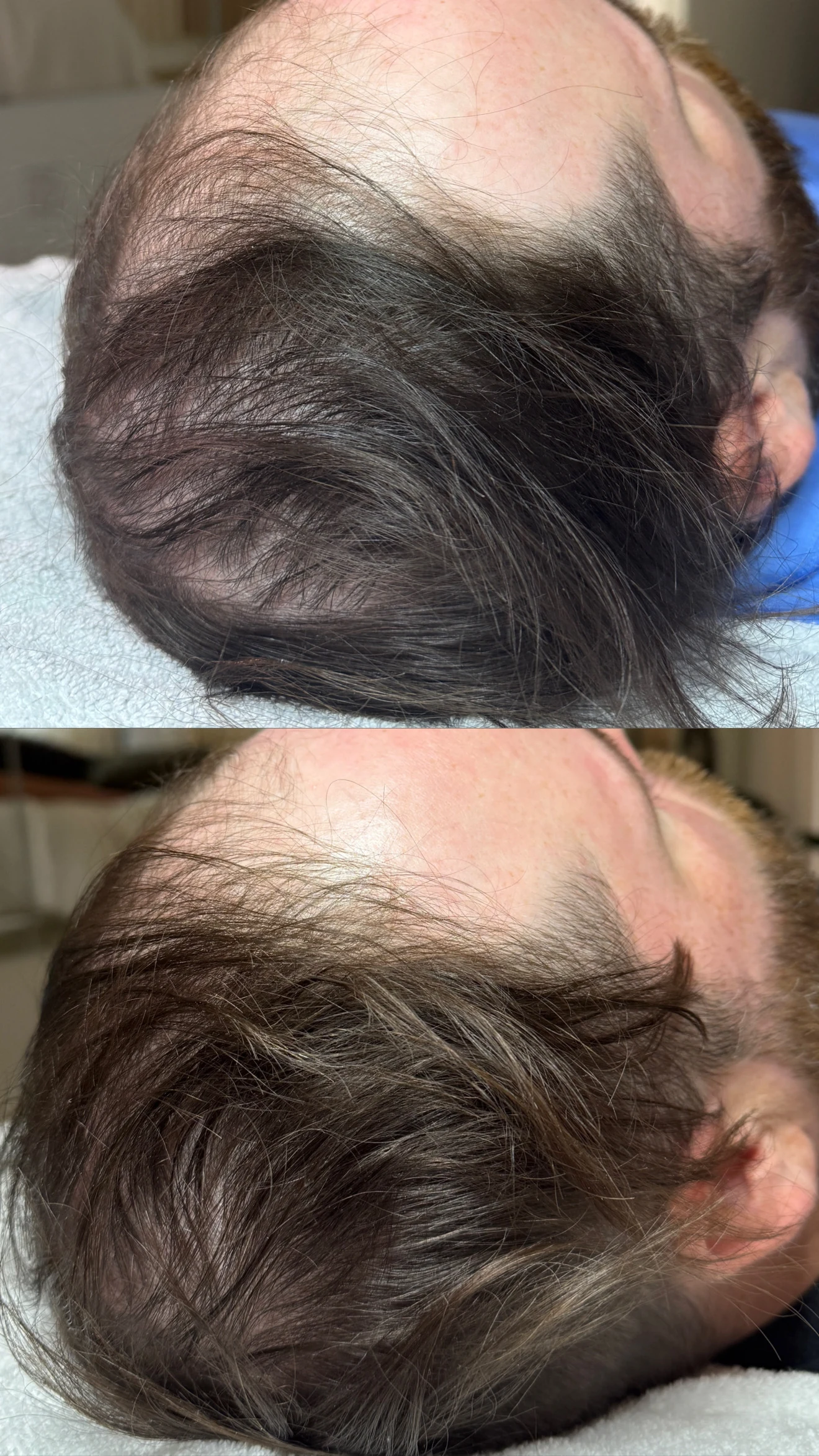
Before PRP hair restoration, prepare a short timeline of shedding or thinning, earlier scalp symptoms and treatments you have tried. Include medication changes and any medical assessment already completed. Ask what type of loss is being considered and how the proposed response will be measured. Consistent comparison photographs and an agreed review point make discussion of progress more useful than changing hairstyle, lighting or expectations between visits.
What you may be looking for
- Compare a scalp-injection option with laser care
- Discuss your specific hair-loss pattern
- Track response over an appropriate review period
Start with your concern
Concerns to assess for PRP hair restoration
- Assessed pattern hair thinning
- Reduced scalp density with an identified cause
- Monitoring response alongside an appropriate hair-loss plan
These are discussion points for your assessment, rather than a diagnosis or a promise of results. Compare concerns and treatment options
Understand the treatment
Understand the procedure before you book
PRP begins with blood collection and preparation of a platelet-rich portion before use in selected scalp areas. It does not diagnose the reason for thinning. Ask how the provider establishes suitability and measures response over time.
The assessment should cover the hair-loss pattern, scalp health, medicines and blood-related history. A broader medical treatment plan may be appropriate even when a cosmetic appointment is being considered.
Your goals, your options
Is this treatment
a fit for you?
Share the timing of hair changes, health conditions, medicines, scalp symptoms and prior treatments. Blood-related conditions and medication history matter for an own-blood procedure.
Individual suitability, expected results and treatment options are discussed at your consultation.
Treatment investment
A clear look
at pricing.
PRP Hair Restoration
Public booking prices reviewed October 10, 2026. All amounts in Canadian dollars. Menus and offers can change; confirm the exact service, package terms, deposit and applicable taxes before booking.
Confirm the current price, appointment options and any applicable taxes when booking.
Explore financing informationYour appointment
What to
expect.
Review the hair concern
Discuss the pattern and onset, existing diagnoses and whether a physician or dermatologist should assess the cause first.
Explain preparation and injection
The provider should explain blood collection, processing, scalp treatment and measures for comfort and cleanliness.
Agree on follow-up
Set a review schedule and clarify the number and cost of proposed visits without guaranteeing regrowth.
After your appointment
A little care
after your visit.
- Follow the scalp-care instructions supplied after the procedure.
- Ask when to resume your existing scalp products and whether medical hair-loss care needs coordination.
Follow the specific aftercare instructions provided at your appointment.
Good questions
A little more
clarity.
Can PRP treat every cause of hair loss?
No. Diagnosis matters, and not everyone responds. Ask which type of loss is being considered and whether another medical treatment deserves attention first.
Is PRP permanent?
The AAD describes repeat and maintenance visits for PRP. Discuss the likely ongoing plan and cost instead of assuming one injection appointment creates a lasting result.
How is it different from FoLix?
PRP involves blood preparation and scalp injections. FoLix is a fractional laser procedure. Each requires its own suitability, evidence and risk discussion.
Can a PRP consultation be useful if I do not know why my hair is thinning?
It can help frame questions, but effective hair-loss treatment begins with identifying the cause. The American Academy of Dermatology describes history, examination and sometimes testing as part of diagnosis. Ask whether medical evaluation is needed before committing to scalp injections, particularly if the pattern or timing is unexplained.
How should I document progress during a PRP hair plan?
Agree with the provider on the areas and review dates, then use consistent lighting, camera angle and hair styling in comparison photos. Keep a record of other treatments or major changes during the course. This practical tracking makes the conversation clearer without promising that PRP will produce a particular amount of regrowth.